REVIEW · COCOA BEACH
2 Hour Private Surf Lesson in Cocoa Beach
Book on Viator →Operated by One Love Surf Lessons LLC · Bookable on Viator
Cocoa Beach turns beginners into surfers fast. This 2-hour private lesson is interesting because it follows a simple rhythm: warm up, learn the safety and technique on land, then go straight into waves with an instructor focused on getting you moving.
I love the way coaching is tailored in real time. In my mind, the best sign is what happened with instructors like Liana and Brian, where first-timers felt comfortable quickly and learned the exact mechanics of standing up and staying safe. I also like that you still get a full lesson even when conditions wobble; one example from past sessions was a wait of about 30 minutes during inclement weather so the lesson could keep going.
My only heads-up is that two hours is a lot of work. Expect leg burn and shoulder fatigue, especially if you are new, because surf practice is nonstop effort once you start paddling.
In This Review
- Key Things That Make This Cocoa Beach Surf Lesson Worth Your Time
- From Palm Lane to Your First Real Waves: How the Two Hours Unfold
- The Land Tutorial: Why Water Safety and Technique Come Before the Ocean
- Getting Up: What Happens When the Instructor Starts Pushing Into Waves
- Weather, Timing, and Why You Still Get Your Full Session
- Gear Included: What You Need to Bring (And What You Don’t)
- Price and Value at $120 Per Person: What You’re Really Paying For
- Who This Lesson Fits Best (And Who Might Be Happier Elsewhere)
- Practical Tips for Your Cocoa Beach Surf Day
- Should You Book This Cocoa Beach Private Surf Lesson?
- FAQ
- Where is the meeting point for the lesson?
- How long is the private surf lesson?
- What is the price per person?
- What is included, and what do I need to bring?
- Is parking included?
- What language are the lessons offered in?
- Is the session private or shared with other people?
- What happens if weather is poor?
- What is the cancellation cutoff?
Key Things That Make This Cocoa Beach Surf Lesson Worth Your Time
- Private, on-your-group instruction instead of a crowded class, so feedback lands fast
- Surf-specific stretching to get your body ready before you’re pushing through the first sets
- A tight land tutorial covering water safety and technique so you’re not guessing in the ocean
- Instructor-driven wave time where you get pushed into waves until the basics click
- Gear included, including surfboards and winter wetsuits, so you show up ready
- Cocoa Beach location with extra parking costs, since parking is not included and varies by season
From Palm Lane to Your First Real Waves: How the Two Hours Unfold
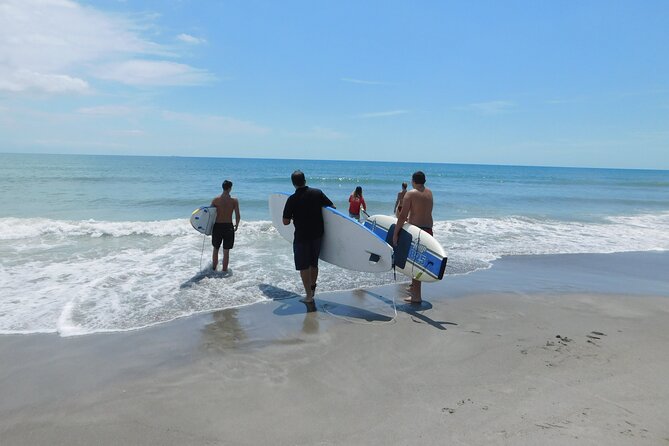
You meet at Palm Lane Beach Access, at 4000 Ocean Beach Blvd in Cocoa Beach. The flow starts before the water, and that is a big reason beginners progress. You begin with surf-specific stretches that target the body parts that usually seize up fast in your first session: legs for stance work and hips/back for paddling.
Next comes the on-land part: a quick but thorough walk-through of water safety and core surf technique. This matters more than it sounds. If you know what to do the moment you are in the lineup, you waste less energy and you hesitate less. That means more attempts and a better chance to feel competent before the session ends.
Then you switch modes and hit the water for the rest of the lesson. The instructor stays hands-on and keeps pushing you into waves so you can build the basics through repetition. This is not a sit-and-watch experience. The goal is to leave with the feel of timing, control, and the next step after you stand.
You can also read our reviews of more private tours in Cocoa Beach

The Land Tutorial: Why Water Safety and Technique Come Before the Ocean
A good surf lesson teaches you how to ride waves, but a great one teaches you how to be safe while you learn. Here, the land tutorial covers essentials like water awareness and technique fundamentals before you rely on instinct.
Even if you are a confident swimmer, ocean conditions can still surprise you. Paddling, positioning, and reading what’s happening around you take mental focus. When your instructor explains the basics on land, you go into the water with a checklist in your head instead of reacting blindly.
You also get technique coaching early enough to matter. One repeat theme from prior lessons is that instructors focus on the transition into standing, not just the dream of standing someday. That showed up in how Brian helped someone with an earlier method and then improved the way the student moved from laying to standing, leading to smoother, faster progress.
If you are the sort of person who wants to understand what you’re doing, this land step will feel reassuring. If you just want to get in the water, it still pays off because you spend less time stuck in the wrong place.
Getting Up: What Happens When the Instructor Starts Pushing Into Waves
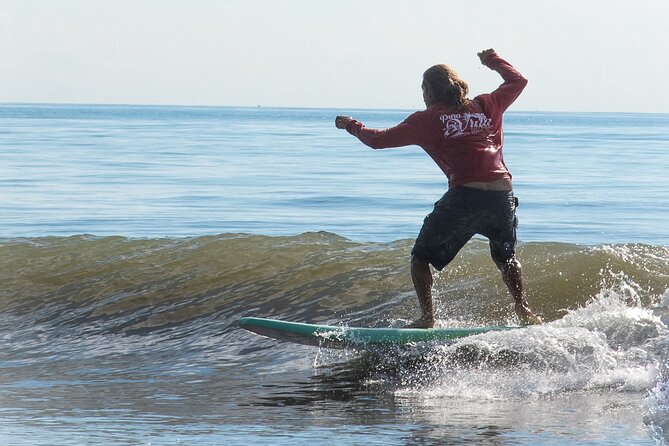
Once you are in the lineup, your instructor’s job becomes very specific: help you find the right moment, reduce mistakes, and build repeatable movement. That usually looks like setting you up so you can catch your waves, then coaching the key micro-steps of standing and balance.
A pattern you will appreciate is patience paired with insistence. Some instructors are so gentle you never get challenged. Others push too hard and scare new surfers off. The best outcomes described from past sessions show instructors who were patient and kept students trying, including a moment where an instructor did not let kids quit.
You’ll also see a strong emphasis on reading the ocean. That might sound abstract until you hear how it gets taught: what you should look for and what safety steps to think about before things go sideways. In sessions taught by Brian, students reported learning not just how to ride but also how to make better calls on ocean conditions at Florida beaches.
Bottom line: you are not just learning surfing as a sport. You are learning it as a practiced skill in a changing environment, with coaching that pushes progress without leaving you behind.
Weather, Timing, and Why You Still Get Your Full Session
Cocoa Beach weather can change quickly. This lesson runs on weather-dependent ocean conditions, which is common for surf training. The practical part for you is this: if conditions aren’t good enough, the provider should offer a different date or a full refund.
More than that, even when conditions wobble mid-lesson, the priority is protecting your session time. One past lesson example included a wait of around 30 minutes during inclement weather and then continuing so the group still got the full two-hour coaching block.
That matters because surf learning depends on practice time. If you show up and lose too much time, you lose the learning loop. Here, the goal is consistency: start with the right warm-up and instruction, then keep moving into the water as soon as it makes sense.
Also, plan ahead. This kind of experience tends to get booked quickly in a busy beach area, with many people securing spots about a couple of weeks in advance. If your trip has fixed dates, I’d lock in early.
Gear Included: What You Need to Bring (And What You Don’t)
One of the smartest parts of this experience is that you do not have to wrestle with surf gear logistics. You’re provided with surfboards and wetsuits in winter time. That means the lesson stays focused on learning instead of rental shopping.
So what do you bring?
- Swimwear
- Sunscreen
- Water to drink
That’s it for the basics. For many first-timers, it helps to show up with sunscreen already applied so you do not lose minutes after you arrive. Also think about how your body feels after paddling. Bring water even if you feel fine when you start, because you’ll burn through it once you’re repeating waves.
If you are traveling with kids, this gear-included setup is also easier. One less thing to track means less stress before you get to the beach.
You can also read our reviews of more tours and experiences in Cocoa Beach

Price and Value at $120 Per Person: What You’re Really Paying For
At $120 per person for about two hours, this is not the cheapest way to try surfing. The value is in the combination of private coaching and included equipment.
Here’s what you’re buying with your money:
- Private instruction that can correct your technique quickly
- Equipment handled for you, including boards and winter wetsuits
- The time structure: warm-up, land safety/technique, then sustained wave practice
- A setup designed to keep you learning through repetition, not just witnessing surfing
If you’ve ever done group classes, you know the limitation: there’s only so much attention an instructor can give. With private coaching, feedback is more direct. That can translate to faster confidence, especially when you are stuck on the same movement for several tries.
Also factor in parking. Beach parking is not included, and it can run about $2 to $5 per hour depending on season. That is worth planning for so the total cost feels predictable.
In short, I think the $120 price makes sense when you value instruction time and a clean, no-fuss gear setup. If you’re trying to minimize cost above all else, you may want to compare other lesson formats. But if you want a better shot at actually standing and riding, private coaching is a strong move.
Who This Lesson Fits Best (And Who Might Be Happier Elsewhere)
This experience lists a moderate physical fitness level as the target. That’s honest. Surfing uses muscles you might not use every day, especially for paddling and getting into position. Two hours is a lot, and it can be a shock even for people who are active.
A good match:
- True beginners who want structure and safety coaching
- Families where the parent wants the instructor focused on the child, not the whole group
- Travelers who want to maximize learning in one session without wasting time
A cautious match:
- Anyone who expects easy, low-effort fun. This is exercise in ocean conditions.
One practical tip based on how people talk about their experience: if you’re on the fence about how long you can go, remember that two hours can be more than enough. If the option exists to shorten the session, that can help you end while you still feel good, rather than pushing until you’re done.
Practical Tips for Your Cocoa Beach Surf Day
These are small things that can make a big difference once you’re out there.
Show up ready to move. Two hours includes land instruction and repeated ocean attempts. Loose planning can turn a smooth first session into a slow one.
Protect your skin early. With sunscreen included in your mindset, apply it before you head into the lesson area.
Bring water and take recovery seriously. Surfing is tiring in waves you might not anticipate. Hydration helps you keep your energy for the next attempt.
Take the instructor seriously. The instructor pushes you into waves until basics improve. That only works if you follow directions and commit to the movement being taught.
Use the private format to your advantage. Ask questions during the land time. If you understand the safety and technique, you’ll spend less energy doing the wrong thing.
Should You Book This Cocoa Beach Private Surf Lesson?
I’d book it if you want a structured first experience with private coaching, included board gear, and enough wave time to actually learn rather than just try. The standout pattern from real sessions is instructor patience paired with clear action. People come in nervous and leave feeling more capable, including kids and teens who want to get riding quickly.
I would think twice only if you’re dealing with serious fatigue risk, mobility limits, or you expect a gentle, low-effort outing. This is active. It’s ocean. It’s learning through repetition.
If you match the fitness level and want your best shot at standing up and staying safe, this is a smart use of beach time in Cocoa Beach.
FAQ
Where is the meeting point for the lesson?
The meeting point is Palm Lane Beach Access, 4000 Ocean Beach Blvd, Cocoa Beach, FL 32931, USA.
How long is the private surf lesson?
It runs for about 2 hours.
What is the price per person?
The price is $120.00 per person.
What is included, and what do I need to bring?
Your surfboard is provided, and wetsuits are provided in winter time. You should bring swimwear, sunscreen, and water to drink.
Is parking included?
No. Beach parking is not included and varies by season, typically around $2 to $5 per hour.
What language are the lessons offered in?
The lesson is offered in English.
Is the session private or shared with other people?
It’s private. Only your group participates.
What happens if weather is poor?
The experience requires good weather. If it’s canceled due to poor weather, you’ll be offered a different date or a full refund.
What is the cancellation cutoff?
You can cancel for free up to 24 hours in advance for a full refund. If you cancel less than 24 hours before the experience, it is not refunded.