REVIEW · COCOA BEACH
Cocoa Beach: Surfing Lessons & Board Rental
Book on GetYourGuide →Operated by Cocoa Beach Surf School · Bookable on GetYourGuide
First waves come fast here. A Cocoa Beach surf lesson gives you the chance to learn at a classic Atlantic spot tied to Kelly Slater. You get real guidance on how to catch waves and stand up, not just a photo op.
I love the way this experience starts with sand practice before you’re sent into the water. It also runs as a small group (limited to 8), so you’re not lost in a crowd.
One possible drawback: there’s no hotel pickup, and the whole session is only 1–2 hours. If you’re hoping for lots of long ocean time right away, you may want to plan your expectations around technique-building first.
In This Review
- Key things to know before you go
- Why Cocoa Beach is such a solid place for your first surf lesson
- The 1–2 hour lesson flow: sand practice, safety, then real waves
- If conditions are tough, here’s what you should expect
- All-day board rental: the part that turns a lesson into real progress
- Instructors and supervision: what good coaching feels like
- You might get one-on-one energy, even in a small group
- Safety and gear: what’s included and why it matters
- Surfing technique basics you’ll actually practice
- Price and value: is $60 per person worth it?
- Who gets the best value
- What to bring and how to prepare for your ocean time
- Who this is best for (and who might look elsewhere)
- Should you book this Cocoa Beach surf lesson?
- FAQ
- Where does the surf lesson take place?
- How long is the experience?
- How much does it cost?
- What’s included in the lesson?
- Do I need to bring any equipment?
- Is hotel pickup included?
- Will I be in a small group?
- What language is the instruction?
- Is this good for beginners?
- What’s the cancellation policy?
Key things to know before you go
- Learn at Cocoa Beach in Florida, right where beginner-friendly wave conditions are the goal
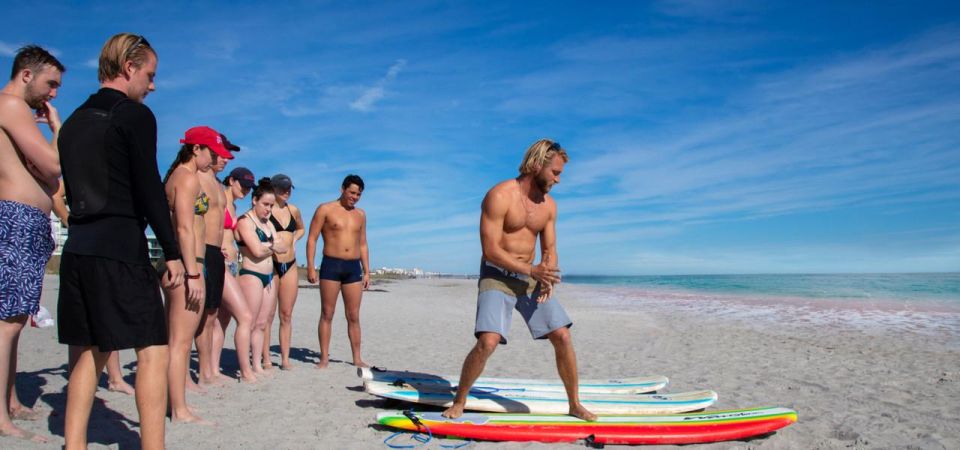
- Sand-to-sea coaching so you build balance and safety steps before paddling out
- All-day board rental means you can keep practicing after the lesson
- Water safety is part of the package, plus you get a leash and wax
- English instruction with a small group size capped at 8 participants
- Instructors stay close while you try broken waves, then move toward more unbroken ones when you’re ready
Why Cocoa Beach is such a solid place for your first surf lesson
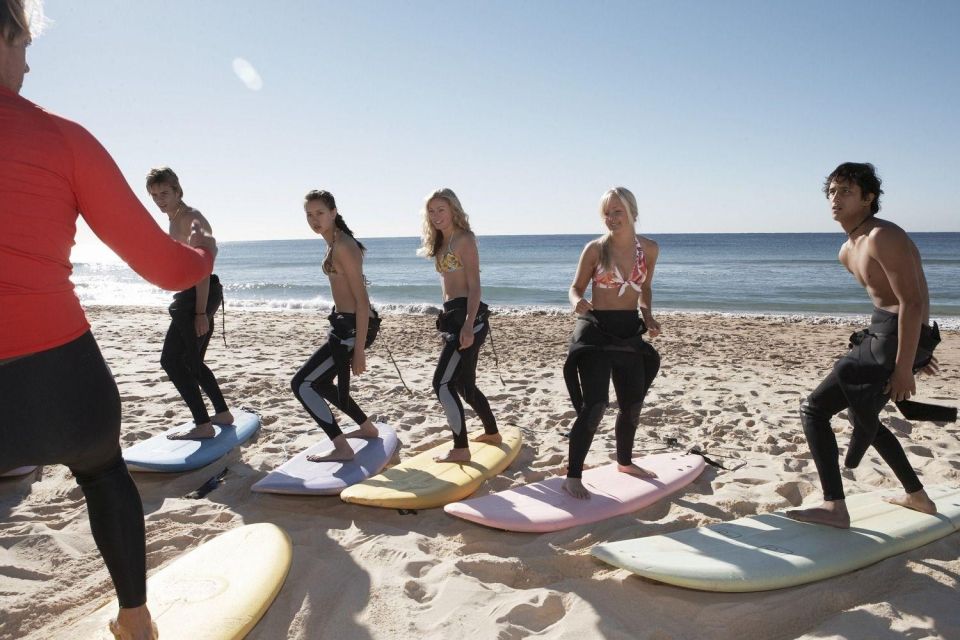
Cocoa Beach has a real surf rhythm. You’re on the Atlantic side, and the energy is different from inland sports. The good news for beginners is that the lesson is designed for learning how to catch waves and ride them step by step, not for showing off.
There’s also the fun mental boost of learning in a place connected with Kelly Slater. It’s not about chasing a legend; it’s about starting at a shoreline that’s been teaching surfers for decades. That matters because the fundamentals you’re taught feel tied to a long-standing local routine: safety first, then timing, then balance.
And yes, you’ll get the best part of surfing pretty quickly: the feeling of being on the open face of a wave. Even if you don’t ride the whole length, the moment you realize the board is moving because you chose the right spot is a big payoff.
You can also read our reviews of more tours and experiences in Cocoa Beach



The 1–2 hour lesson flow: sand practice, safety, then real waves
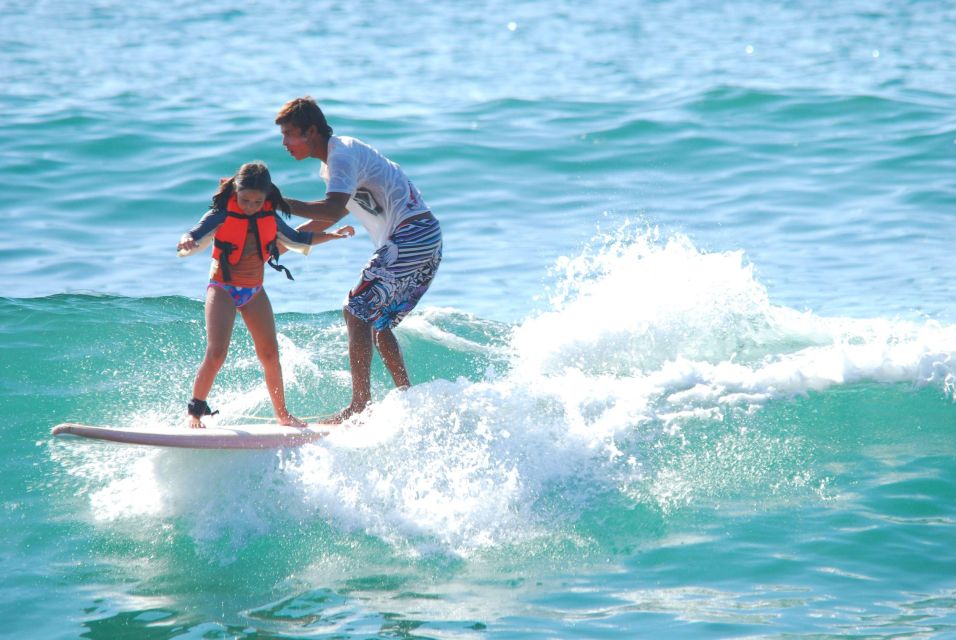
This is a structured lesson, and that structure is what makes it work for first-timers. You meet your instructor at the beach with a surfboard in hand, and the session typically moves through three phases.
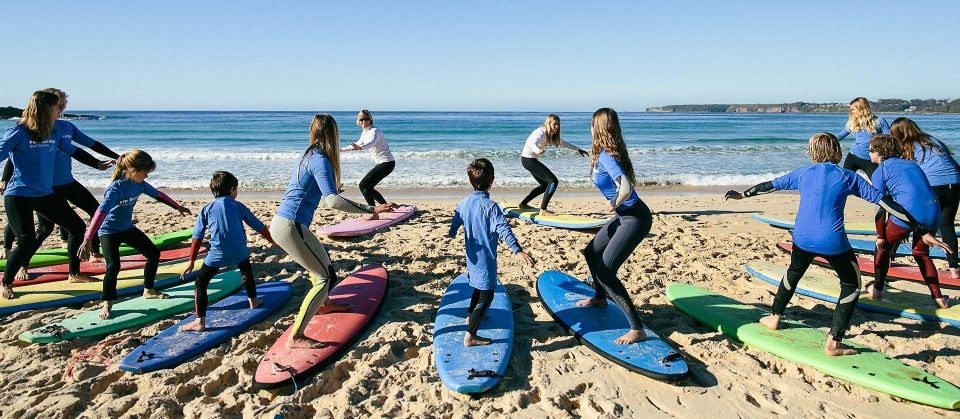
First comes the sand work. This is where you practice the basic surfing moves without the stress of water conditions. It helps you understand how the board feels under your hands and feet, and it’s also where you can pick up safety protocols early—before your adrenaline shows up.
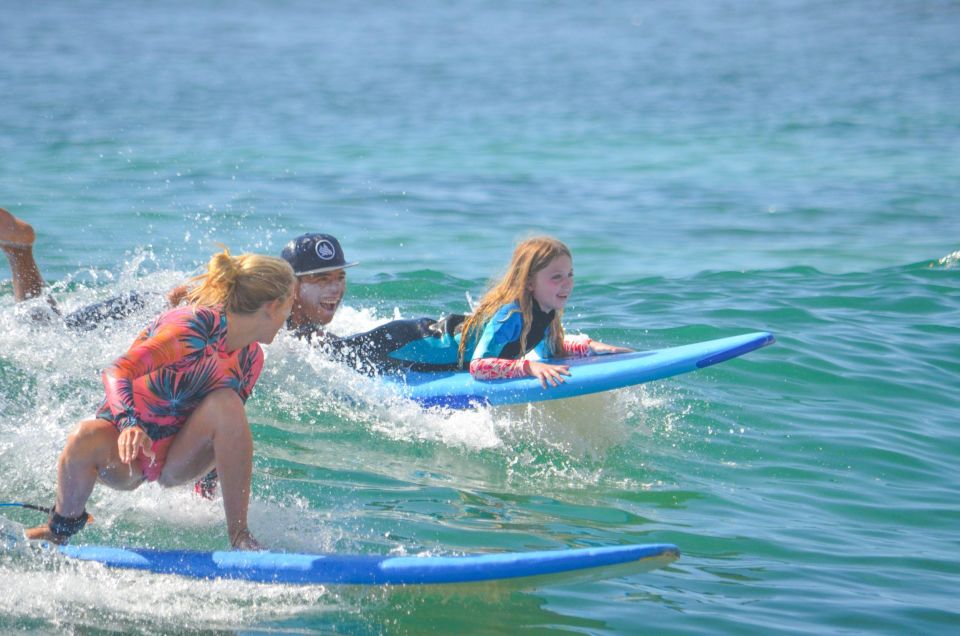
Next is the water portion with supervision. The idea is to start with gentle, broken waves. You focus on the sensation of being in the wave and the mechanics of getting to your feet. When it clicks, it’s a rush—because you’re not just balancing on a board on land anymore.
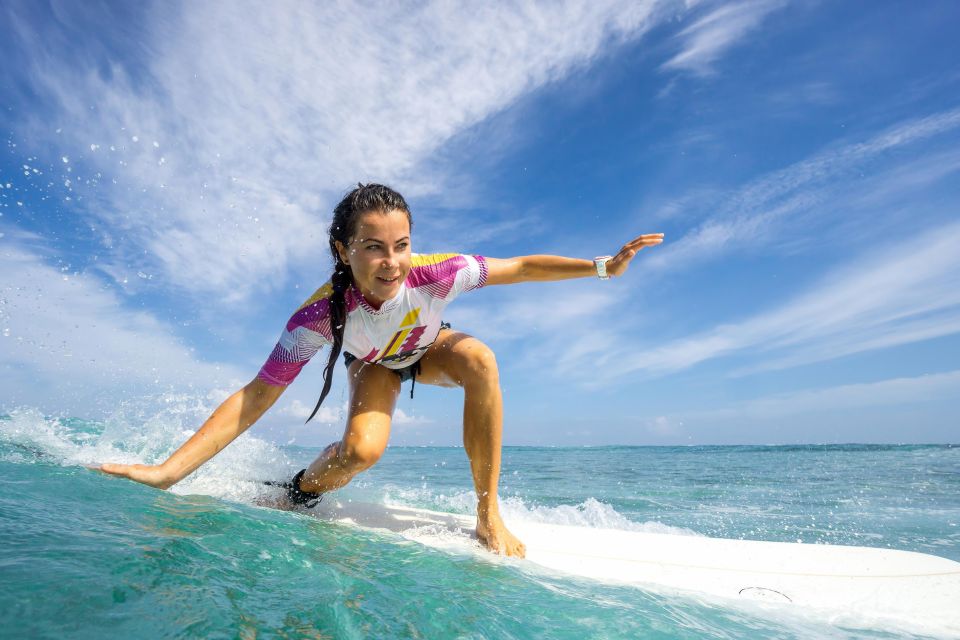
Finally, once you’re comfortable, your instructor guides you toward more challenging catches, including unbroken waves. The lesson doesn’t rush you, but it does push you forward as you improve. It’s the right progression: learn the feeling, then refine it.
If conditions are tough, here’s what you should expect
Not every day is picture-perfect. One of the most useful lessons I’ve learned from surf instruction culture is this: when conditions aren’t ideal, you slow down and focus on technique. In your case, you’ll still get help on how to time your attempts, and your instructor should keep an eye on rest so you don’t burn out too early.
Warm water helps too. You might still feel tired from paddling and hopping back up, but you’re less likely to be distracted by cold.
All-day board rental: the part that turns a lesson into real progress
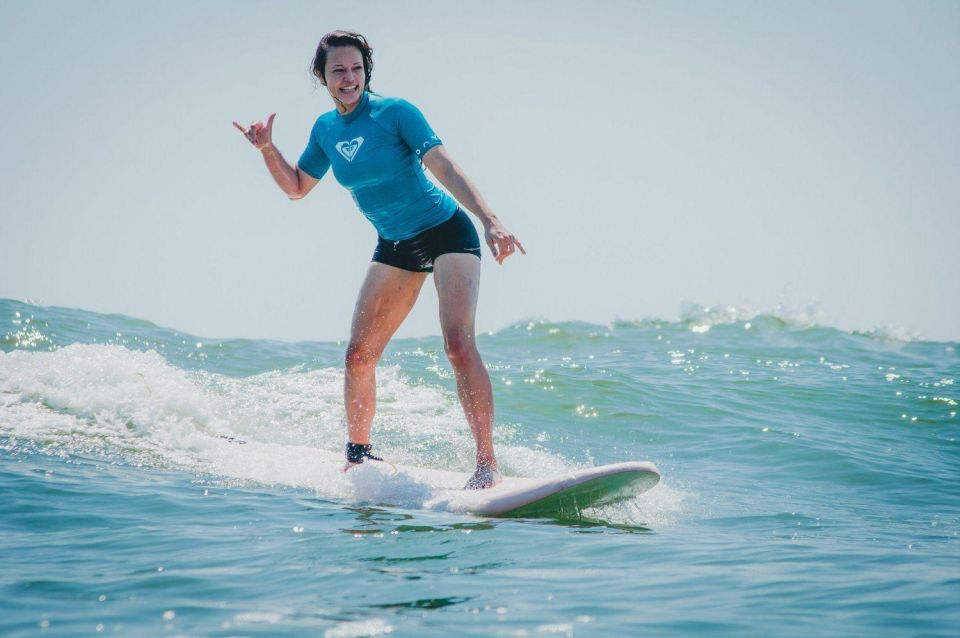
Most first-time lessons teach you one good moment—and then you go home and it fades. This one includes all-day board rental, so you can practice right after your coaching ends. That changes everything.
Think about it this way: surfing is a muscle memory sport. You learn a cue in the lesson, then you need repeated tries to turn it into instinct. When you’ve got the board available later the same day, you can reinforce what you just learned while it’s still fresh.
You also get a leash and wax as part of the package. That’s practical because it removes the minor headaches of figuring out gear. The more mental energy you save for balance and timing, the more useful your practice becomes.
One extra benefit: you can keep working at your own pace. If you did a few successful rides early on, you can try again immediately. If you had wipeouts, you’re not forced to quit after the clock runs out.
Instructors and supervision: what good coaching feels like
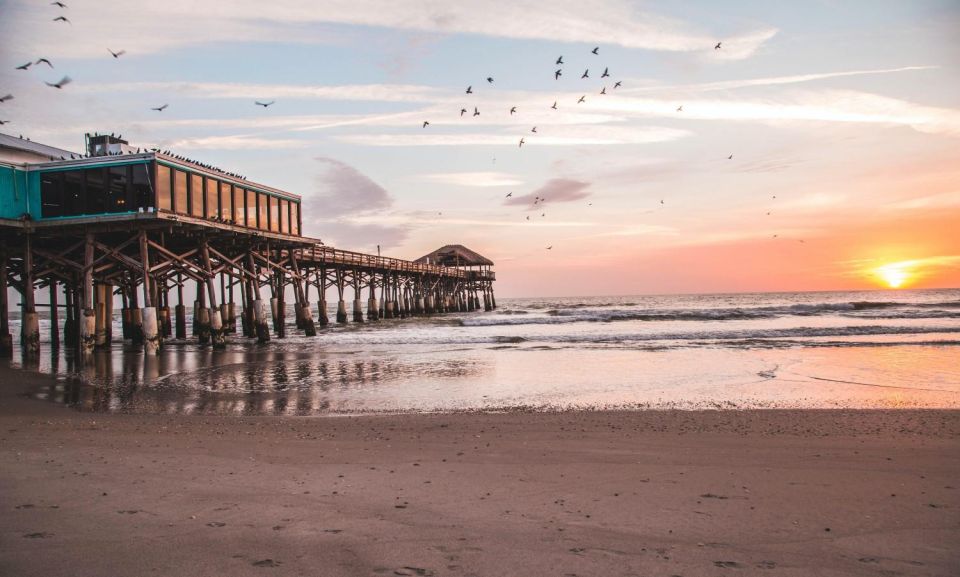
In surf lessons, the instructor’s job isn’t just to tell you what to do. It’s to watch what you’re actually doing and fix the detail that’s holding you back.
From what I see highlighted in the experience, instructors are hands-on and patient—especially with first-timers. Names that come up include Hugo and Taylor, both praised for being supportive and giving clear advice even when water conditions were rough. Another instructor mentioned is Noah, who stayed close throughout and coached during attempts.
A detail I really appreciate: you can get rest built into the session. When you’re learning to catch waves, fatigue changes your technique fast. If your instructor is mindful of breaks or limits, you’re more likely to improve instead of just getting exhausted.






You might get one-on-one energy, even in a small group
The group is limited to 8. On some days, the setup can feel like a close coaching ratio—especially if the instructor can focus on fewer people at once. Don’t bank on a specific ratio, but expect attentive instruction rather than a quick walk-through.
Also, listen for the feedback style. If you’re positioned a bit far from the instructor, you might miss a key cue. If that happens, ask them to repeat it once you’re back in a spot where you can hear clearly.
Safety and gear: what’s included and why it matters
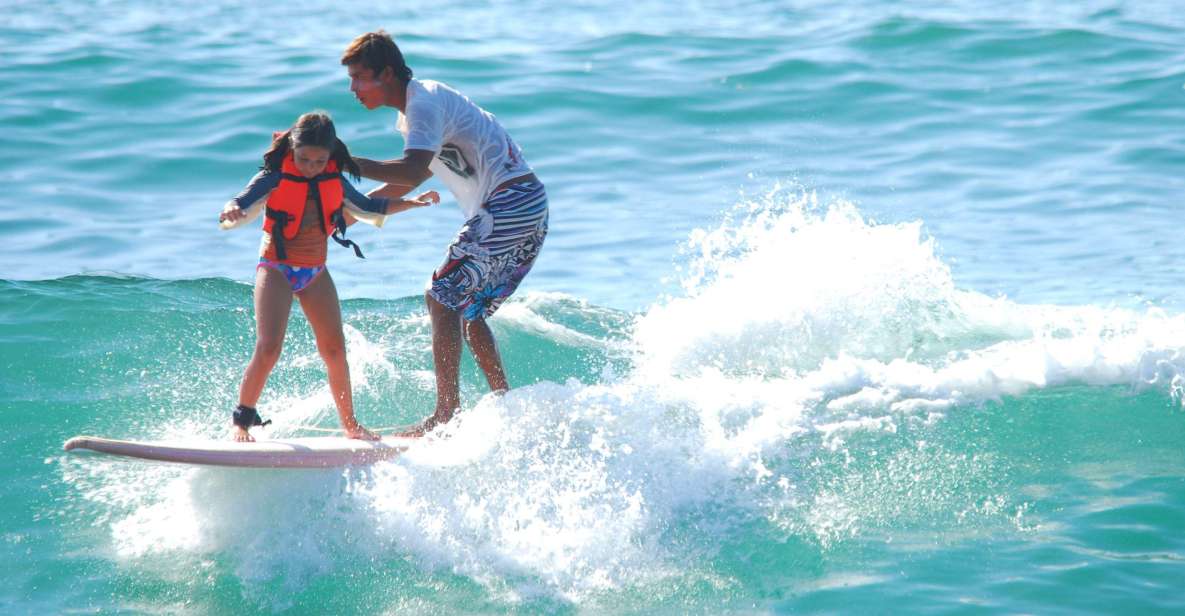
Surfing lessons aren’t just about balance. They’re about moving safely in ocean conditions.
This experience includes a water safety lesson and supervision during your time in the water. You’ll cover safety protocols before you’re out there trying to stand up. For beginners, that’s huge. People often focus on the wave, but the real goal early on is knowing how to stay safe and how to manage your board and body in the water.
You’ll also get:
- Leash
- Wax
- A lesson focused on catching the right kind of waves for beginners
All of that supports a simple reality: the more gear and safety details are handled for you, the less likely you are to lose momentum.
Surfing technique basics you’ll actually practice
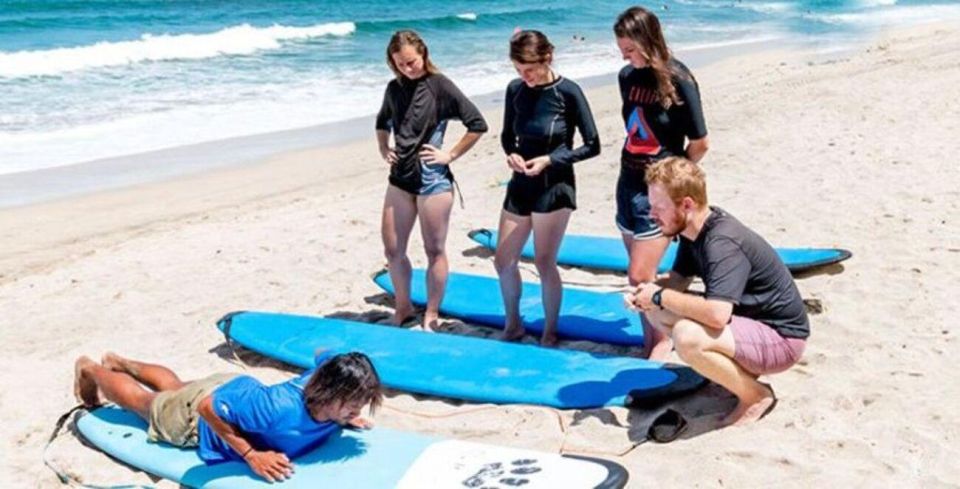
The lesson is designed to get you onto your feet and riding, but it does it through fundamentals you can feel right away.
Here are the skills you’ll work on during the session:
- Getting comfortable on the board after the sand warmups
- Using broken waves first to understand timing
- Focusing on the feeling of riding the wave rather than forcing a stance
- Catching more unbroken waves as your confidence grows
The best part is that the progression is about connection. You’re learning what your body needs to do when the board is moving in water, not just copying a stance.
And because you’re on a rental board the rest of the day, you can revisit the specific movement you struggled with. That’s where real improvement happens.
Price and value: is $60 per person worth it?
$60 per person for 1–2 hours sounds reasonable, but the value really comes from what you get bundled in.
You’re paying for:
- A guided water safety lesson
- A lesson that teaches you how to catch waves and stand
- All-day board rental
- A leash and wax
Most beginner experiences either give you instruction or equipment. Here you get both, plus the chance to keep practicing after the lesson ends. If you’re willing to stay out for the extra rental time, the cost spreads across multiple practice attempts instead of a single short session.
Also, the small group limit (8 participants max) matters. It usually means more attention for each person, which is what you want when your goal is learning fast without guessing.
Who gets the best value
You’ll probably feel the value most if:
- You’re a first-time surfer or returning after a long break
- You’re motivated to practice beyond the lesson window
- You want a structured start that doesn’t leave you stuck with a board but no coaching
If you’re the kind of person who wants to be in the ocean for hours without structured teaching, this might feel shorter than you imagined. Still, the included all-day rental helps bridge that gap.
What to bring and how to prepare for your ocean time
The good, simple prep list from the experience is sunscreen. That’s the one item you don’t want to forget in Florida.
Beyond that, plan to be in the ocean and moving around. Wear something you’re comfortable getting wet in, and think ahead about sun exposure—because once you’re busy learning, it’s easy to assume you’ll remember to reapply.
If you want to get more from the lesson, show up ready to listen and repeat. Surfing learning isn’t one-and-done. The cue that matters most might come after your first wipeout, so stay patient with yourself.
Who this is best for (and who might look elsewhere)
This experience fits best for beginners and casual first-timers who want a guided start at a real surfing beach.
You’ll likely enjoy it if you:
- Want to learn how to catch gentle waves first
- Prefer instruction with supervision rather than figuring it out alone
- Like the idea of keeping the board for the rest of the day to practice
It may be less ideal if you:
- Need hotel pickup and door-to-door convenience (this does not include it)
- Want long, uninterrupted ocean time as the main event
- Get frustrated when conditions aren’t perfect and learning shifts toward fundamentals
Should you book this Cocoa Beach surf lesson?
I think this is a smart booking for many first-timers—especially because of the combo of instruction plus all-day board rental. If you use the extra practice time, you can turn your lesson from a fun try into real skill-building.
Book it if you want structure: sand warmups, safety protocols, then broken waves, followed by more unbroken rides as you’re ready. And because the group is capped at 8 with English instruction, you should get the close coaching you need to improve quickly.
Skip it only if you’re set on convenience (since there’s no pickup) or you know you won’t take advantage of the board rental afterward.
If you’re standing at the beach thinking you want a first wave—and you want it taught, not guessed—this one is worth your time.
FAQ
Where does the surf lesson take place?
It takes place in Cocoa Beach, Florida, United States.
How long is the experience?
It lasts about 1–2 hours. Starting times depend on availability.
How much does it cost?
The price is $60 per person.
What’s included in the lesson?
You get a water safety lesson, all-day board rental, a leash, and wax.
Do I need to bring any equipment?
You only need to bring sunscreen. The board rental, leash, and wax are included.
Is hotel pickup included?
No. Hotel pickup and drop-off are not included.
Will I be in a small group?
Yes. It’s a small group limited to 8 participants.
What language is the instruction?
The instructor provides instruction in English.
Is this good for beginners?
Yes. The lesson focuses on beginner-friendly surf spots and teaches you how to catch waves, starting with gentle, broken waves.
What’s the cancellation policy?
You can cancel up to 24 hours in advance for a full refund.