REVIEW · ORLANDO
Orlando Indoor Skydiving Experience with 2 Flights & Personalized Certificate
Book on Viator →Operated by iFLY Indoor Skydiving · Bookable on Viator
Wind tunnel flying has a way of grabbing your attention fast. At iFLY Orlando, you trade real sky for a smooth column of air at 130–175 mph, then get two coached freefall flights plus a signed souvenir certificate. The setup is built for first-timers, with time to watch from the deck before you suit up and step into the chamber.
I especially like the small-group training (up to 12 people) and the way instructors teach hand signals and body position before your turn. One real drawback to plan for: the actual flight is short, with 60 seconds per flight, and the feeling of value depends a lot on whether you want to add the more intense upgrade options.
In This Review
- Key things to know before you book
- iFLY Orlando wind tunnel flying: what it feels like in the chamber
- Check-in, observation deck, and the 75-minute flow
- Training class: hand signals, body position, and why you should listen
- Two 60-second flights: equipment, air speed, and your first real control
- The instructor’s performance and your personalized flight certificate
- A practical note on the go-high upgrade
- Cost and value: what $105.44 buys (and why the “short flight” complaint makes sense)
- Who this fits (and who should skip it)
- Practical tips that make your first tunnel session easier
- Should you book iFLY Orlando with 2 flights?
- FAQ
- FAQ
- How long is the Orlando indoor wind tunnel experience?
- What does the 2-flight package include?
- How long does each tunnel flight last?
- What is the minimum age to participate?
- Are there weight limits?
- What should I wear for my session?
- Who cannot fly?
Key things to know before you book
- Two flights, not one: you’ll get two 60-second turns inside the tunnel as part of this package.
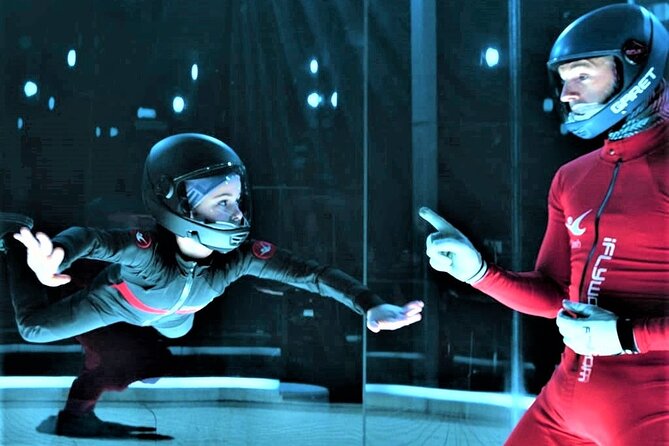
- You’re coached the whole time: an instructor stays right with you and guides your position using standard signals.
- It’s a high-speed air column: the chamber uses a wall-to-wall column of air tuned for safe, controlled freefall style flying.
- Training includes the basics and the signals: you practice what to do before you ever go into the flight chamber.
- You get a signed certificate: it’s personalized to commemorate your first flight.
- Upgrades cost extra: if you want the more intense go-high experience or bundled media, expect add-on pricing.
iFLY Orlando wind tunnel flying: what it feels like in the chamber
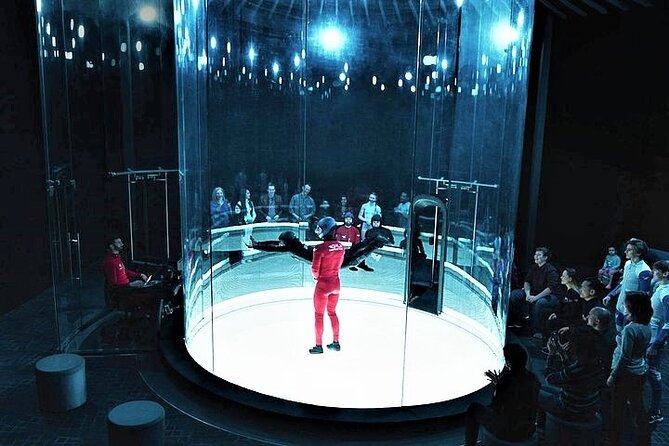
This is indoor freefall-style flying without jumping out of a plane. The wind tunnel is a vertical system: fans pull air through the chamber, then push it back down sides, creating a steady column that keeps you floating at speed. That’s why it feels controlled, not chaotic.
Here’s the part people usually remember: you’re not just getting a ride. You’re learning a few key body-position ideas fast, and then using them while you feel a strong wall of wind. The speed is no joke either. iFLY Orlando’s wind tunnel runs in the 130–175 mph range, which is exactly why it can feel thrilling even though you’re in a glass-walled room.
And it’s not like being dropped or flung. You breathe normally and focus on the instructor’s cues. If you’re nervous about heights, this can still scratch the bucket-list itch because the experience is about controlling your flight in the tunnel, not about fear of a fall.
You can also read our reviews of more tours and experiences in Orlando.



Check-in, observation deck, and the 75-minute flow
Your session starts at 8969 International Dr, Orlando, back at the iFLY Orlando facility. When you arrive, plan to check in and get oriented quickly. One of the smart design choices here is that you’ll often have a moment to watch other people fly before you go.
Then the schedule basically moves through three phases:
- Training in a classroom-style setup
- Suit-up and equipment check so you’re ready
- Two separate flight turns, one at a time, with your instructor
The whole first-time experience runs about 1 hour 15 minutes to around 1.5 hours, depending on timing and how the day is running.
The “watch first” moment matters more than you’d think. When you can see what body position looks like and how the instructor communicates, your first flight stops feeling mysterious. You walk in knowing what you’re trying to do.
Training class: hand signals, body position, and why you should listen
Before you enter the chamber, you’ll get a training session with a certified flight instructor. Your group stays small—up to 12 people—so you’re not stuck waiting forever in a giant mob.
In the training, you’ll cover:
- what the experience will feel like
- how the instructor will communicate once you’re inside
- the basics of body positioning for stable flight
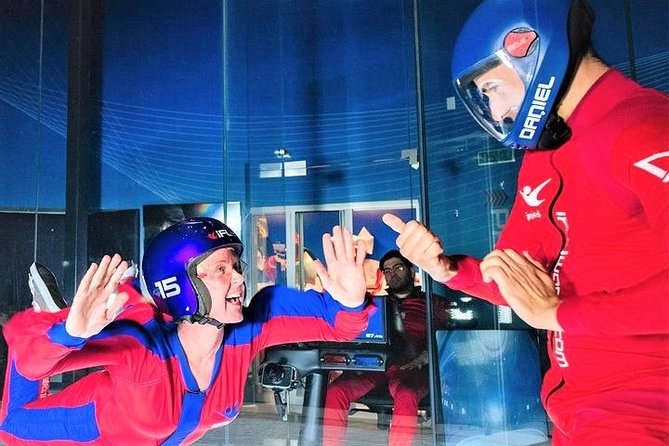
The hand signals part is key. In a normal activity, you might rely on words. In the tunnel, wind pressure and helmet g-force mean verbal instructions can be hard to hear. iFLY uses standardized signals, so your success depends on recognizing those cues quickly.
This is also where you learn the “rules” of the chamber. For example, tricks and flips are generally not the focus for a first-timer flight. The emphasis is safety and stability. If you want to progress later, your instructor can tell you what to practice next after your first flight experience.
Two 60-second flights: equipment, air speed, and your first real control
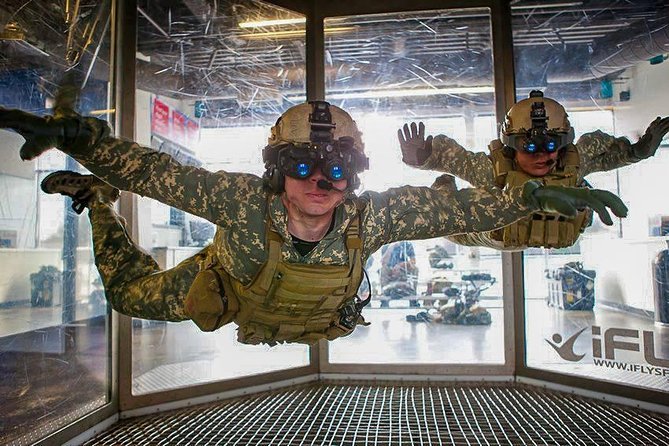
Once the training is done, it’s time to suit up. iFLY provides the gear you need, including the flight suit. You do not use a parachute for this activity.
You’ll also want to think of the flight experience as two short learning reps:
- Flight 1: getting your bearings, feeling the air, matching your body position to the cues
- Flight 2: taking that knowledge and tightening up what you’re doing
That “two turns” detail is one of the reasons this package works well. One single flight can feel like a quick taste. Two flights give you enough time to understand what to listen for—and then benefit from what you learned immediately.
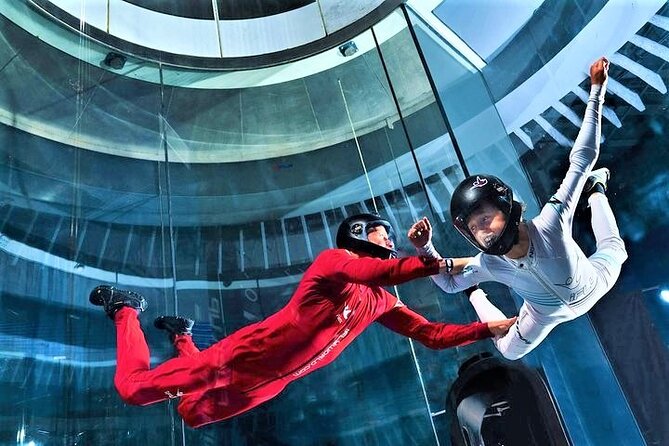
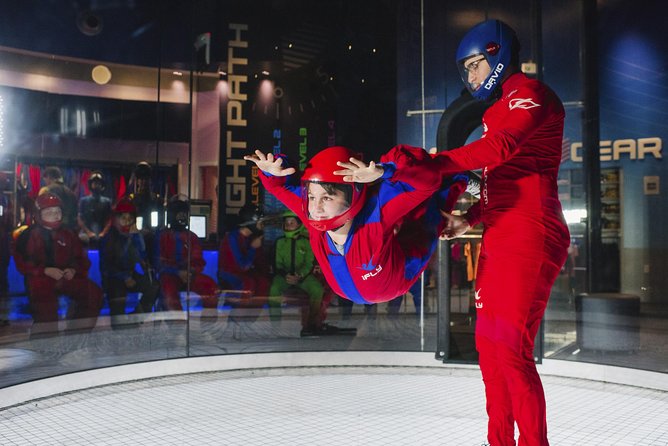
During your turns, you fly one at a time while your instructor assists you inside. From the outside, you’ll also see others being guided just beyond the chamber, which makes the whole thing feel like a real skill session, not just a novelty photo moment.
Close-up tip: during your first flight, focus less on trying to “win” the tunnel and more on following the instructor’s cues exactly. Your flight will usually look calmer when you stop overthinking and just respond to signals.
The instructor’s performance and your personalized flight certificate
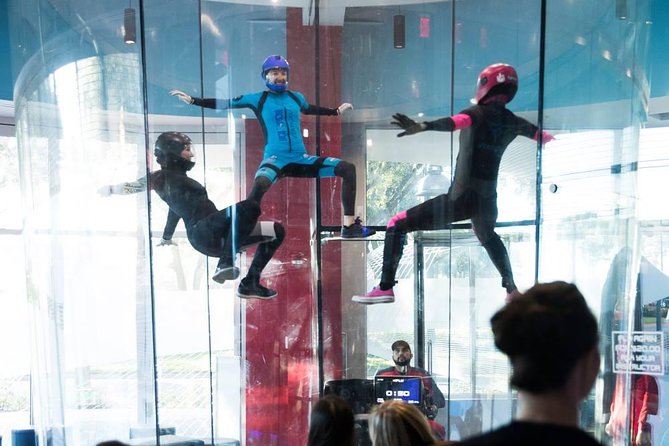
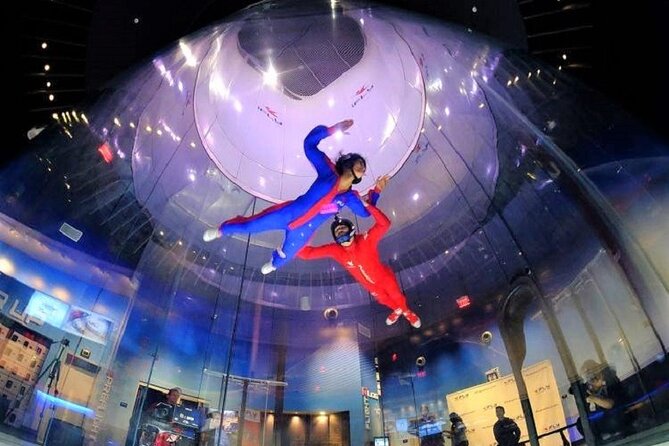
After your two turns, the instructor performs inside the tunnel—typically a mix of twists, turns, and flips that show what’s possible once you understand the controls. Even if you’re just there to say you flew, this performance helps you appreciate the physics you were experiencing.
Then comes the souvenir payoff: iFLY provides a signed certificate of flight achievement. It’s meant to commemorate your first flight, and it’s the kind of thing you can bring home without needing to purchase extras.
Photos and videos are also typically available for purchase. iFLY can capture your flight from their side, which is handy because trying to record yourself with your own phone outside the chamber is tricky. If you care about keeping the moment, decide before you go whether you want official media or if you’d rather spend your money on another flight.



A practical note on the go-high upgrade
Some people add an option often described as going higher in the tunnel. This upgrade costs extra and can change the overall value of the day. If you’re budget-focused, treat the base two-flight package as the main event, then only upgrade if you’re confident you’ll want the extra intensity.
Cost and value: what $105.44 buys (and why the “short flight” complaint makes sense)
At $105.44 per person for two flights, you’re paying for:
- training with a certified instructor
- two tunnel flights (60 seconds each)
- use of the included gear
- your certificate
So yes, it’s not a long-duration ride. The wind tunnel time is measured in minutes, not hours. That’s why some people feel price tension. If you’re expecting a lengthy thrill session, you can be disappointed by how quickly your turns happen.
But there’s another side to the value equation. Indoor wind tunnel flying is equipment-intensive and instructor-driven. You get real coaching and two attempts, plus a safe structure that lets first-timers succeed quickly. A good comparison is what iFLY itself points out: outdoor freefall is about 45 seconds, and their basic package delivers two 60-second turns, which they describe as being roughly in the ballpark of multiple skydives for a fraction of the price.
That said, the experience is still a “short and powerful” activity. If you want a longer session, it usually means paying for additional flights or upgrades.
How I’d judge value for you:
- If you mainly want the thrill and the first-time success, this price can be fair.
- If you’re chasing maximum flight time, you should assume the final price goes up once you start adding options.
Who this fits (and who should skip it)
This activity is designed for lots of people, but it’s not for everyone. iFLY Orlando has clear medical and physical restrictions.
You won’t be able to fly if you have any of the following (as listed):
- neck, back, or heart injuries
- shoulder dislocations
- pregnancy
- a hard cast
Weight matters too. You must be under 300 lbs. If you’re between 260–300 lbs, the location requires additional evaluation during check-in, and they may not be able to accommodate everyone in that range.
Age-wise, the minimum age is 3 years. If someone is under 18, a parent or guardian must sign the waiver.
If you have physical or cognitive challenges and want to experience the activity, you can contact the location to request a certified instructor for an All Abilities-style guided experience. That’s worth doing ahead of time so you can match your needs to their staffing.
Practical tips that make your first tunnel session easier
A few small choices can make your day smoother.
What to wear
- well-fitting, lace-up sneakers or running shoes
- comfortable clothes (casual is best)
- pants and a shirt without a collar can be easier under the flight suit
- if you have long hair, braid it and keep it in a low bun
What to remove
Take off items that can flap or loosen: jewelry, watches, rings, hair accessories, and anything that might move during flight. Empty your pockets too. Lockers are available, but it’s smartest to leave valuables behind if you can.
Glasses
Glasses are allowed. There are larger goggles that fit over them.
Arrive on time
Your session begins promptly. Build in a buffer; arriving about 10–15 minutes early helps with check-in and getting suited without stress.
One behavior that helps a lot
During training, ask questions while you still have the instructor’s attention. Once you’re in the chamber, you’ll be busy following cues. Your best chance to understand how to improve your control is in the classroom phase.
Should you book iFLY Orlando with 2 flights?
If you want a memorable first-time indoor freefall experience in Orlando, this is an easy recommendation—especially if you like activities where coaching is part of the product. The two flight turns, the training with hand signals, and the signed certificate make it feel like more than just a quick stunt.
Book it if:
- you’re okay with short, intense flight time and want two attempts
- you’re traveling as a couple or family and want a fun non-theme-park break
- you want a height-friendly way to experience that flying sensation
Consider skipping or modifying your plan if:
- you’re expecting long flight duration for the base price
- you know you’ll likely want the go-high upgrade or extra media, which can raise the final cost quickly
- you fall into the medical or weight restrictions
If you’re the kind of person who would be happiest with maximum time in the air, you might do better budgeting for upgrades from the start. If you’re content with two solid first flights and want a certificate keepsake, the base 2-flight package is a solid way to start your bucket-list journey.
FAQ
FAQ
How long is the Orlando indoor wind tunnel experience?
Plan on about 1 hour and 15 minutes, approximately. The full first-time experience is often around 1 hour and 30 minutes from start to finish.
What does the 2-flight package include?
You get two flights for one person, training, use of all required gear, one-on-one guidance from a certified flight instructor, and a certificate of flight achievement.
How long does each tunnel flight last?
Each tunnel flight lasts about 60 seconds.
What is the minimum age to participate?
The minimum age is 3 years old.
Are there weight limits?
Yes. Participants must weigh less than 300 lbs. Those between 260 and 300 lbs require additional evaluation at check-in and may have restrictions.
What should I wear for my session?
Wear well-fitting, lace-up sneakers or running shoes and comfortable clothes. It’s recommended to wear pants and a shirt without a collar. You’ll also wear a flight suit over your clothing.
Who cannot fly?
You will not be able to fly if you have neck or back injuries, heart injuries, shoulder dislocations, are pregnant, or are wearing a hard cast.