REVIEW · ORLANDO
2 Hours Escape Room A Knight To Escape
Book on Viator →Operated by The Escape Effect · Bookable on Viator
A Knight To Escape turns Orlando into a medieval problem-solving zone with a split-start format in Stonebury Castle. You’re either playing common prisoners or courageous knights, racing through an eerie dungeon and an outdoor courtyard in about two hours. It’s designed to test communication as much as logic.
I really like two things here: the themed set design feels like the real deal, and the puzzle variety keeps most groups engaged from start to finish. If your team likes clue-based momentum and talking things out, this is a good fit.
One consideration: the game is split, so you may spend time waiting while the other side handles their tasks. Add in slower hint timing for some puzzle moments, and you could feel a bit stuck—especially when the room runs cold, so bring layers.
In This Review
- Key takeaways before you book
- Stonebury Castle: what this 2-hour escape room feels like
- The medieval roles: knights vs. prisoners (and why it’s more than theme)
- Splitting into two spaces: the good, the annoying, and the fix
- Puzzles, flow, and difficulty: what to expect inside the castle walls
- Meeting point and timing: where you start and how to be ready
- Staff and hint system: helpful when it works, frustrating when it doesn’t
- Comfort tip: the castle is cold, plan for it
- Price and value: is $69.95 per person worth it?
- Who should book this escape room (and who should skip it)
- Should you book A Knight To Escape?
- FAQ
- How long is A Knight To Escape?
- Where does the escape room take place?
- How much does it cost per person?
- Is it a private experience for my group?
- Do I need a printout ticket?
- Can service animals go to the experience?
- Is it easy to reach with public transportation?
- Can I cancel for a full refund?
Key takeaways before you book
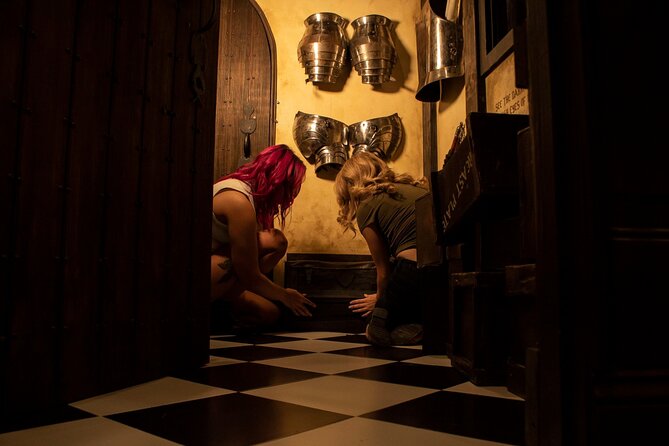
- Stonebury Castle split-start means two areas (dungeon + courtyard) with coordinated progress
- Medieval theming + solid set builds create a “you’re in it” feel
- Communication is the real skill—you’ll need to trade info fast between sides
- Hint flow can affect pacing if you’re waiting for help or the host checks in later
- Difficulty can run high for escape-room regulars, so don’t show up too casual
Stonebury Castle: what this 2-hour escape room feels like
This is not a one-room, single-team escape. A Knight To Escape is built around a split-start setup inside Stonebury Castle, with your group divided between two spaces: an eerie dungeon and an imposing courtyard. One side tackles their puzzles while the other side works theirs, then you pass along what you’ve earned so the whole team can keep moving.
That structure matters. In many escape rooms, you solve, open, and move on like a smooth conveyor belt. Here, your pace depends on how quickly both halves click into the same rhythm. If you have a chatty, organized crew, you’ll benefit. If your team tends to go quiet, you might lose time between “we think we found it” and “we actually need the other side.”
The tour runs about two hours, and that timing is part of the design challenge. It’s long enough for satisfying progress and a real sense of accomplishment, but short enough that dead ends can feel extra painful when clocks start pressing.
You can also read our reviews of more tours and experiences in Orlando



The medieval roles: knights vs. prisoners (and why it’s more than theme)

You don’t just get costumes and a backdrop. The concept of playing either common prisoners or courageous knights affects how you experience the space and tasks. The dungeon side feels more enclosed and tense, while the courtyard side comes off more open and imposing. That contrast helps you orient your team and stay engaged, even when you’re separated.
The key is what you’ll do with that separation: you’ll need to coordinate. When one side solves something, you’re not fully “done.” You’re handing off pieces—information, items, or progress—so the other side can use it. This makes teamwork and communication the main ingredient, not just puzzle skill.
If you’re bringing kids or a mixed-age group, the “roles” concept often lands well because it gives people a clear identity for their part of the mission. If you’re a seasoned escape-room crew, you’ll likely still appreciate the extra layer of interaction it forces.
Splitting into two spaces: the good, the annoying, and the fix
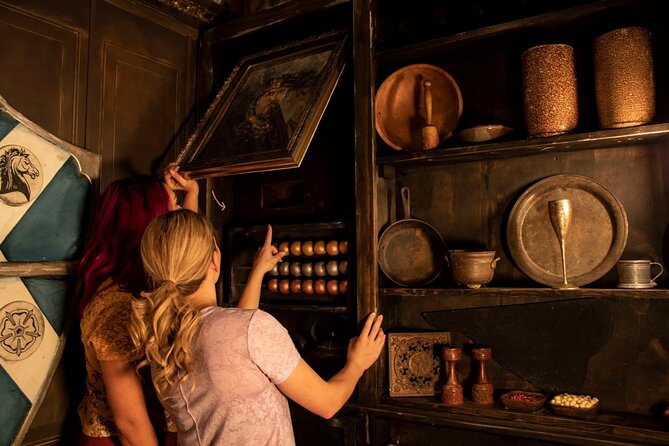
Here’s the biggest practical reality: you’ll be separated between the dungeon and courtyard, and that can create two very different experiences.
The upside: many groups love the energy when both sides are actively working. It feels like two teams in a movie, each trying to outthink the castle. When the puzzles line up well, the handoffs are fun and rewarding.
The downside: if one side finds a dead end—or simply needs longer to get unstuck—your other half can wind up waiting. One player described spending time standing around while they waited for the other side to trigger something helpful. Another noted that certain clue moments involved waiting for the host to check in.
How to fix it as a team? Use the time you’re waiting for the other side to do their work. Assign a “navigator” role: someone watches for small hints, calls out what they see, and prepares a plan for when the handoff arrives. If you don’t assign roles, people drift into frustration fast.
Also, when you request clues, treat it like a reset, not a loophole. If you ask for too many clarifications without fully understanding what you already solved, you can lose momentum.
Puzzles, flow, and difficulty: what to expect inside the castle walls
A Knight To Escape aims for high challenge for an escape room. One review called out a difficulty around a 9 out of 10, and that matches the overall feel: you’ll likely hit moments where the solution isn’t obvious, and you’ll have to work assumptions harder than you’d like.
The puzzles can be a mix:
- Some are described as clever and satisfying once you connect the dots.
- Others can feel tougher or less intuitive, depending on how your team approaches logic, patterns, or the wording of clue messages.
- A couple players felt puzzle flow could stall—either because solved pieces didn’t connect neatly, or because the game master doesn’t actively watch until you hit a hint button.
That last part is worth your attention if you’re the type who hates silence. In one account, the idea was that game masters don’t continuously observe your progress; instead, they mostly peek in when you request a hint. That can be fine if the puzzle design is forgiving, but if you’re stuck after making a wrong assumption, you might waste time before help arrives.
Still, if your group enjoys working through confusion without needing constant nudges, the challenge can be part of the fun. And even critical feedback usually paired that with respect for the set design and theme.
Meeting point and timing: where you start and how to be ready
You’ll meet at 11701 International Dr, Orlando, FL 32821. The activity ends back at the meeting point, so you’re not doing a complicated multi-stop day.
Check-in is part of the experience, but it’s straightforward. You’ll use a mobile ticket, and you should plan to arrive with enough time to get organized before the clock starts. Escape rooms punish late arrivals hard—two hours vanishes quickly once you’re in play mode.
Booking tends to move ahead; it’s often reserved about 8 days in advance on average. If you’re traveling during busy weeks, try not to leave it for the last minute.






Staff and hint system: helpful when it works, frustrating when it doesn’t
The staff vibe seems to vary by moment and group. Many players described hosts as courteous and nice, especially in how they handle clue requests. The welcome and cleanliness also came up as positives.
But the hint system itself can shape the overall mood:
- You might see on-screen messages that the host will be with you shortly.
- Some groups reported waiting a few minutes for hints during key moments.
- One critique argued that the host mainly responds after a button request, which can let your team accidentally go down the wrong path longer than necessary.
So here’s the practical take: if you’re playing with a group that hates waiting, agree on a clue strategy before you start. For example, decide how long you’ll try a puzzle before requesting help—then stick to it. That keeps the room from turning into a debate while the clock ticks.
Comfort tip: the castle is cold, plan for it
One of the most consistent practical bits: the rooms can run freezing. That doesn’t sound like “fun” until you realize what it means—thin shirts and sweaty theme excitement don’t go well in a dungeon environment.
Bring a jacket or at least a warm layer. Even if you love the medieval vibe, you’ll play better if you’re comfortable enough to focus instead of shivering while you decode clues.
Price and value: is $69.95 per person worth it?
At $69.95 per person for roughly two hours, you should judge this like you would any premium Orlando activity: is the experience level matching the price?
For many people, the answer is yes—especially if you care about:
- strong thematic build quality
- a split-start style that forces teamwork
- puzzle challenge that feels genuinely hard
For other groups, the price stings if you experience:
- too much downtime while the other side works
- clue delays during time-critical moments
- puzzle flow that feels vague or disconnected
So how do you decide?
Pick A Knight To Escape if your group values teamwork and you enjoy a challenge where communication matters. Pass if your group wants a smooth, single-track puzzle ride with constant guidance. This isn’t the cheapest escape room concept in Orlando; it’s more like a “high-stakes teamwork” experience. Pay accordingly.
Who should book this escape room (and who should skip it)
You’ll likely love it if:
- you enjoy escape rooms with a real countdown and problem solving under pressure
- you’re a family or group that communicates well
- your team enjoys themed environments with dungeon/castle contrast
- you don’t mind occasional waiting as part of a split-team design
You might want to skip or consider another option if:
- your group hates downtime and needs constant action
- you’re very sensitive to puzzle ambiguity
- you prefer game masters who actively monitor and step in without waiting for hint buttons
Should you book A Knight To Escape?
My take: book it if you want a themed, two-area escape room that makes teamwork the main event and you’re okay with a little waiting as your team coordinates. The set design and puzzle challenge are strong reasons to try it, and the format can feel like a real mission instead of just one room full of locks.
Don’t book it if you’re expecting a perfectly smooth, always-on guidance experience. At this price point, wasted minutes matter. If you’re the kind of group that gets frustrated by stalled puzzle flow, look for something with tighter puzzle connections and faster feedback.
If you do book, come dressed for cold rooms, assign roles inside your team, and agree on a clue request strategy. That turns the split-start structure from a source of annoyance into part of the fun.
FAQ
How long is A Knight To Escape?
The experience is about 2 hours.
Where does the escape room take place?
The meeting point is at 11701 International Dr, Orlando, FL 32821, USA, and it ends back at the same location.
How much does it cost per person?
It’s $69.95 per person.
Is it a private experience for my group?
Yes. It’s listed as a private tour/activity, meaning only your group participates.
Do I need a printout ticket?
No. A mobile ticket is used.
Can service animals go to the experience?
Yes. Service animals are allowed.
Is it easy to reach with public transportation?
It’s listed as near public transportation.
Can I cancel for a full refund?
Yes. Free cancellation is available up to 24 hours in advance for a full refund. After that window, refunds aren’t available.